Judith & Artemis
In the year 1536, a young artist in Florence painted a scene of two women cutting off the head of bearded man draped in red. The blood, which matches the hue of the velvet draped over the man’s body, can be seen on the women’s arms as one pushes the the sword in straight and the other holds his head with a look of intense concentration. In one final plea, the victim’s right hand lifts up towards one of the women, unable to grasp his way out this situation and back into the world of the living.
This is Judith Beheading Holofernes.
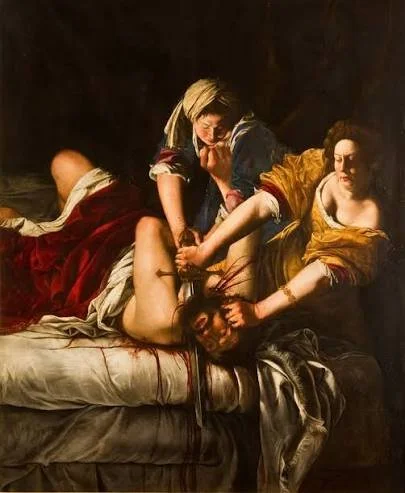
Judith Beheading Holofernes by Artemisia Gentileschi (1620)
When I first laid eyes on this painting at the Uffizi in Florence, I was both repelled and enticed by what was portrayed. I remember our tour guide showing us the same scene in a painting by Caravaggio that predated this one by more than a decade. When we walked past the two women cutting this man’s head for the second time in a separate painting, I wondered why such a violent story latched onto the human imagination to warrant its various productions. I recalled seeing it across other museums in Europe, too, but I preferred to turn my head in the direction of prettier pictures, less gruesome scenes of Venus and the Virgin Mary that didn't portray two women in the heat of a violent act.
But this is not a painting about two murderous women. Not in the way you may think.
The painting, named Judith Beheading Holofernes, depicts the apocryphal biblical storyit’s named after. In this ancient story, a young and beautiful widowed woman named Judith embarks on a mission to save her Jewish enclave under threat by the Assyrians. Her Jewish neighbors condemned themselves to their fate, making a bargain with their God to save them if they agreed to hand themselves over the Assyrian general Holofernes and his encroaching army to avoid bloodshed. Judith approaches her people and admonishes them, proclaiming that in no way are the Jews to surrender and betray their faith by bowing to the Assyrians.
After her big speech, Judith, dressed in her finest and having shed her widow grab for the first time since her husband died, leaves the town of Bethulia with her slave-woman to enter the camp of the Assyrians under the guise of hospitality. The two women bide their time, making friends with and emotionally seducing the enemy until one night, the general falls asleep intoxicated after a dinner with the beautiful Judith.
It as at this point we reach the scene depicted in the painting above, where Judith, determined to save her people, cuts off General Holofernes’ head with the help of her slave-woman. We see only this brief moment of violence in the painting, but a separate painting by the same artist continues the story of the two women placing the general’s decapitated head in a bag to carry out of the Assyrian camp and back to Bethulia. It is the aftermath, the carrying of the head or discovery of the body, that most artworks depict.

Judith and Her Maidservant with the Head of Holofernes by Artemisia Gentileschi
The Book of Judith, which is only included in Catholic and Eastern Orthodox bibles, has been a popular subject for artists since the Medieval period. Botticelli himself painted a series of works depicting the discovery of Holofernes’ body and the carrying of his head to Bethulia in the second half of the 1400’s. A Virgin Mary-like pregnant woman is featured in the latter, similar to the female figures in his famous artwork La Primavera that I discussed in an earlier post.
With exception to Caravaggio's Beheading of Holofernes, most depictions of this story from the earlier Medieval and Renaissance periods do not show this level of violence or this level of gore, but a chaste and beautiful Judith who represents feminine virtues while saving her community. Even Caravaggio’s somewhat violent scene from 1599-1600 displays a young Judith who is naive and disgusted by what she must do, untouched by blood and not fully participating in the violence.
In contrast, the painting of 1620 we started with is not shy about the act being committed. The women are dirtied by the blood of their victim, full participants, not gentle maidens cowering from inflicting pain and taking life. They are unassuming warriors of a more deceptive battle.
But why is this painting so different from other versions of the same story? Why are two women, who were (are) supposed to be pure, gentle, kind, and averted to violence almost relishing in the violence of these scene? Where is the woman presented in other works of the same story - the frightful woman, the sexualized woman, the virtuous woman?
The divergence and unique perspective relates to the person behind the painting. In this instance, we do not have man painting women in his image, but a woman named Artemisia Gentileschi painting her story and her interpretation of a woman named Judith slaying the enemy.
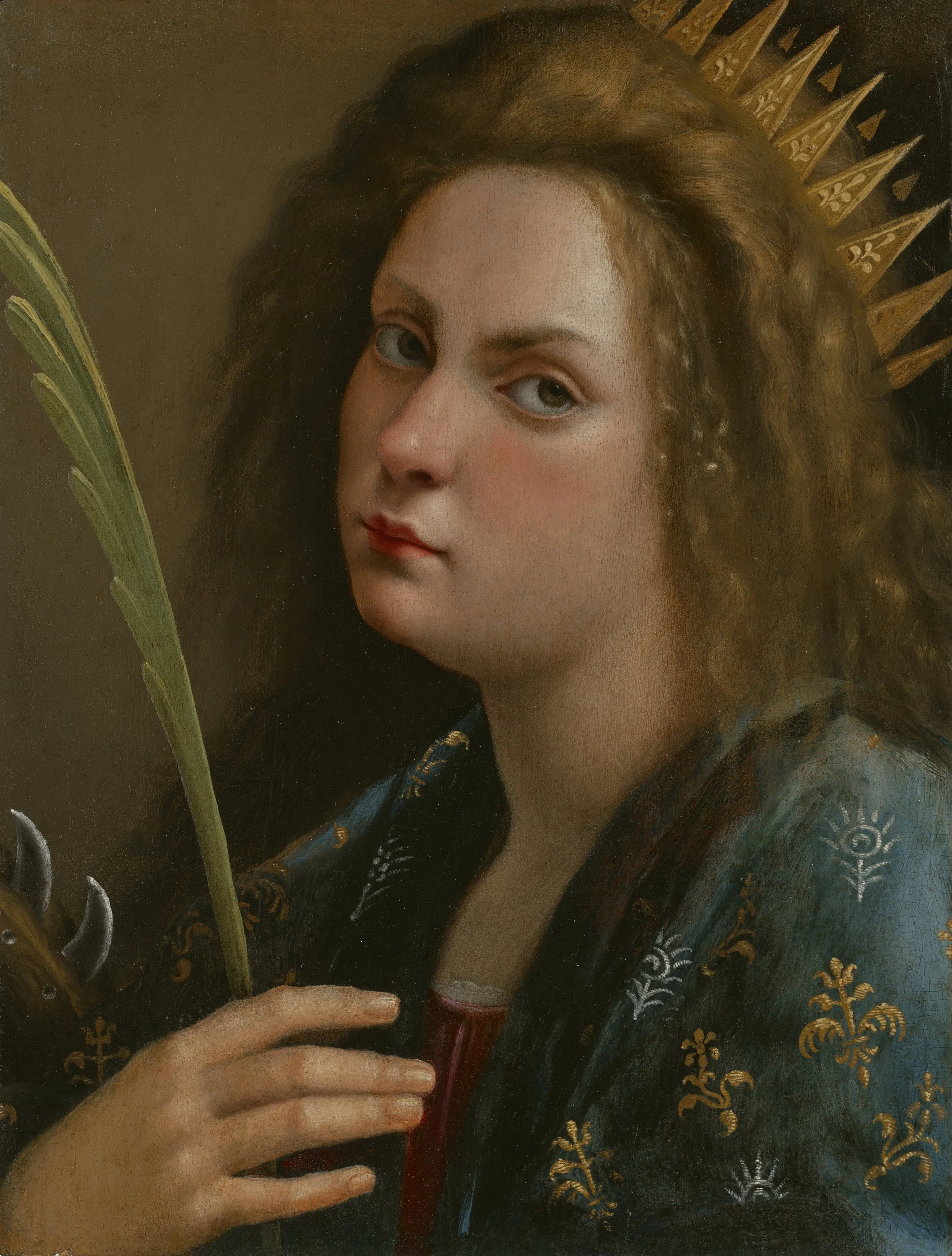
Self-Portrait as Saint Catherine of Alexandria by Artemesia Gentileschi
Artemisia, who was born into the Italian world of art in 1593, was raised by a father who was painter, her childhood consisting of days spent in her father’s studio where she developed her natural skills and learned the methods of Caravaggio with a watchful eye. As a result of both her circumstances and great talent, she became one of the most notable painters of the Baroque period, rivaling male counterparts in popularity and prestige at a time when it was much more difficult to be a woman artist.
Artemisia’s personal history took a turn when she was 18, when a fellow painter and a co-worker of her father’s, Agostino Tassi, raped Artemisia in her father’s home. The couple surprisingly continued an affair for nearly a year after the event. When Tassi broke his alleged promise to marry Artemisia, she did not stay silent about the beginning of their affair, but pressed charges against Tassi for the original rape. The idea at this time and for most of history was that if the rapist didn’t marry his victim, she would be unmarriageable for the rest of her life.
The result was in an infamous public trial in Rome where Artemisia described the sexual assault in detail. Tightened cords were placed around her finger to test the truth of her responses, to which Artemisia responded with bitter irony that the cord resembles the ring Tassi promised when he proclaimed his intention to marry her after the rape. It was right after the rape and during the time of the trial that Artemisia painted her first version of Judith Beheading Holofernes.
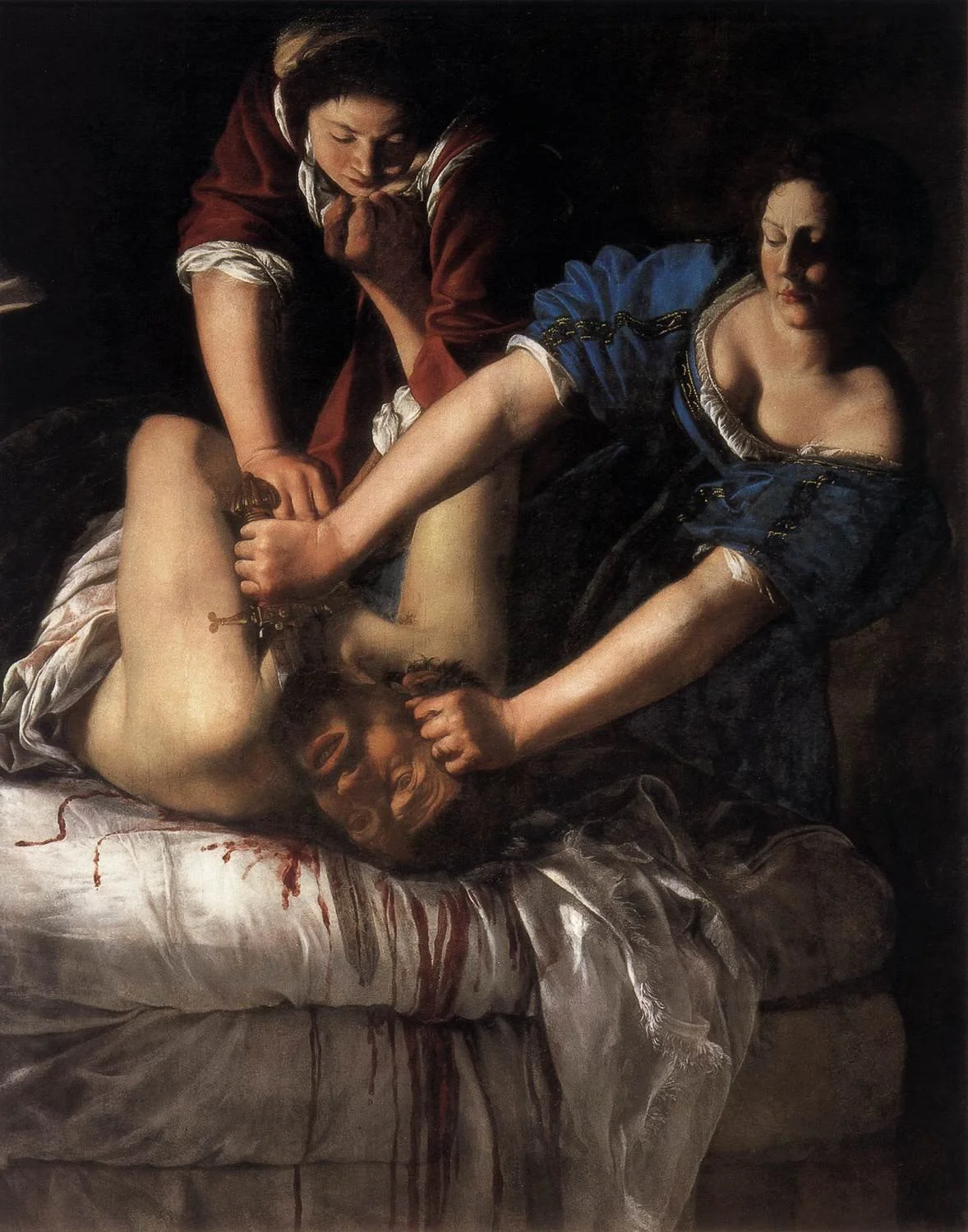
Judith Beheading Holofernes by Artemisia Gentileschi (1612-1613). This first version differs slightly from her later version pictured above. Here, Judith wears a deep blue dress instead of yellow hue while most of her hair is blackened by the shadow.
This painting, which tells a popular Catholic biblical story, is all the more fascinating when considering Artemesia’s personal history and that it was painted after her sexual assault. The woman to the right dressed in blue, who is Judith, is said to resemble Artemisia herself. Unlike Judith, praised for being chaste and pure, who was beautiful and sexualized but never had to sleep with Holofernes, Artemisia had no choice and was forced into a threatening situation that brought scandal to her reputation.
In her artistic rendition of Judith Beheading Holofernes, Artemisia assumes the role of Judith, her purity intact. Any view of her as a ruined rape victim could be transformed into the saint-like status of Judith. She holds back Holofernes’ head, perhaps the head of Tassi, beheading him before he gets the change to violate her. She assumes control with the help of woman, who in the reality, stood by silently and was complicit in organizing the tragic event of Artemisia’s real life.
Additionally, in the later rendition at the top of the page, Judith is featured wearing a gold band featuring the goddess Artemis. This is the artist’s namesake, yes, but the possible symbolism associated with Zeus’ daughter is also striking. Artemis, whose domains inlaced the hunt and childbirth is also the protector of unmarried women and girls, the protector of the sort of incident Artemisia had to endure.
Artemis was a virgin goddess who was never threatened by the unwanted pursuit of men. When the mortal Actaeon violated Artemis’ privacy when her and her maidens were bathing, he was turned into a stag who was hunted down and killed by his own men.
The setting of the painting itself is also quite sensual. The background is dark, possibly illuminated by candlelight, and is full of soft, sensual fabrics and flesh on flesh with a luxurious bed as a focal point. This is a violent seen, but also seemingly sexual and erotic in nature given the context, displaying the proximity of sensuality and violence and how something intended to express love and pleasure can quickly be turned into something used to inflict pain on another human being.
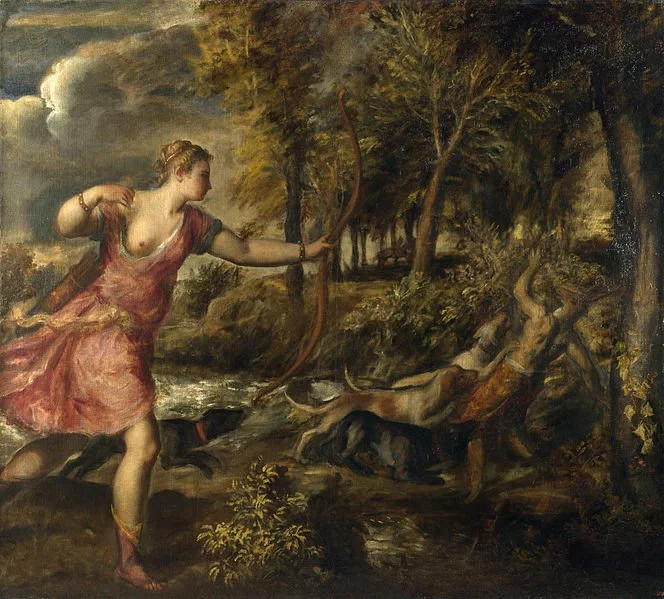
The Death of Actaeon by Titian
What Artemisia was able to do here was flip the script. She could inhabit Judith the pious ad brave and Artemis the powerful virgin. She could cut off the head of her attacker before he rose from the bed to conduct war against her.
Furthermore, beyond a reclamation of her own narrative and emotional processing, it is interesting how this painting may provide a greater analysis on the rape and subjugation of women in general, not as told through the story of Judith and Holofernes in and of itself, but through the retelling of Artemisia’s rape in the context of a story who’s overarching setting and theme is war.
What is provided is a juxtaposition between the pervasive phenomena of rape and the concept of war, for, what is war in most contexts?
War is the conquering of people and land, of taking, grabbing, and subjugating groups of people, treating them not as human beings but as objects to be dismissed or acquired. I am not a pacifist and I am too pragmatic to believe that war is never justified, but energetically, war is an expression of the masculine energy, sometimes unyielding and expressing itself in unhealthy forms.
And what is rape? Rape is also about control, about the opponent taking and conquering what they want. Women can rape too, but it is more often men because they have the physical upper-hand. They also have the upper hand in most societies, too.
Just think about the myriad of terms used to describe war and rape that are interchangeable in both concepts. Assault, penetrate, invade to name a few.
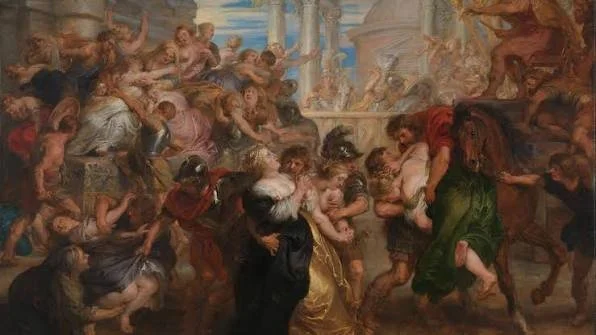
The Rape of the Sabine Women by Peter Paul Rubens
Men across cultures, socioeconomic classes, countries, and races have and continue to perpetually subjugate women through rape and sexual assault as a sort of energetic war not about land boundaries or kingdoms, but still in an effort to dominate and take control, this time in the internal dominion. When land grabbing and boundaries are at stake, rape is only more pervasive.
Rape is the war energy contorted.
Rape is war on the body, war on the individual psyche, and war on the feminine as a receptive and flowing force. When someone feels threatened by the feminine or without power, that is when they take and that is when they rape. Who controls the body has the power and if somebody wants to feel power quickly, the way is to take control of someone else’s body.
It all persists because the desire for control never disappears, especially as society highly averse to the feminine outside of its relegated bounds.
In the Beheading of Holofernes by Artemisia Gentileschi, Artemisia possibly retells her own story, but she also cuts off the head off the contorted war energy that attempts to assume power where it doesn’t fit. In this story of Judith, Judith takes control of the body before it has the chance to massacre a group of people in true battle.
I’m obviously not advocating for a beheading approach here, but what happens when you cut off the contorted war energy at the head before it builds to seek domination?
This is not a question I can answer and this essay is already too long, but this is something I’ve been thinking about in the context of society and the human condition. Gender, war, sex, power, they’re all entangled.
xo,
Zoë
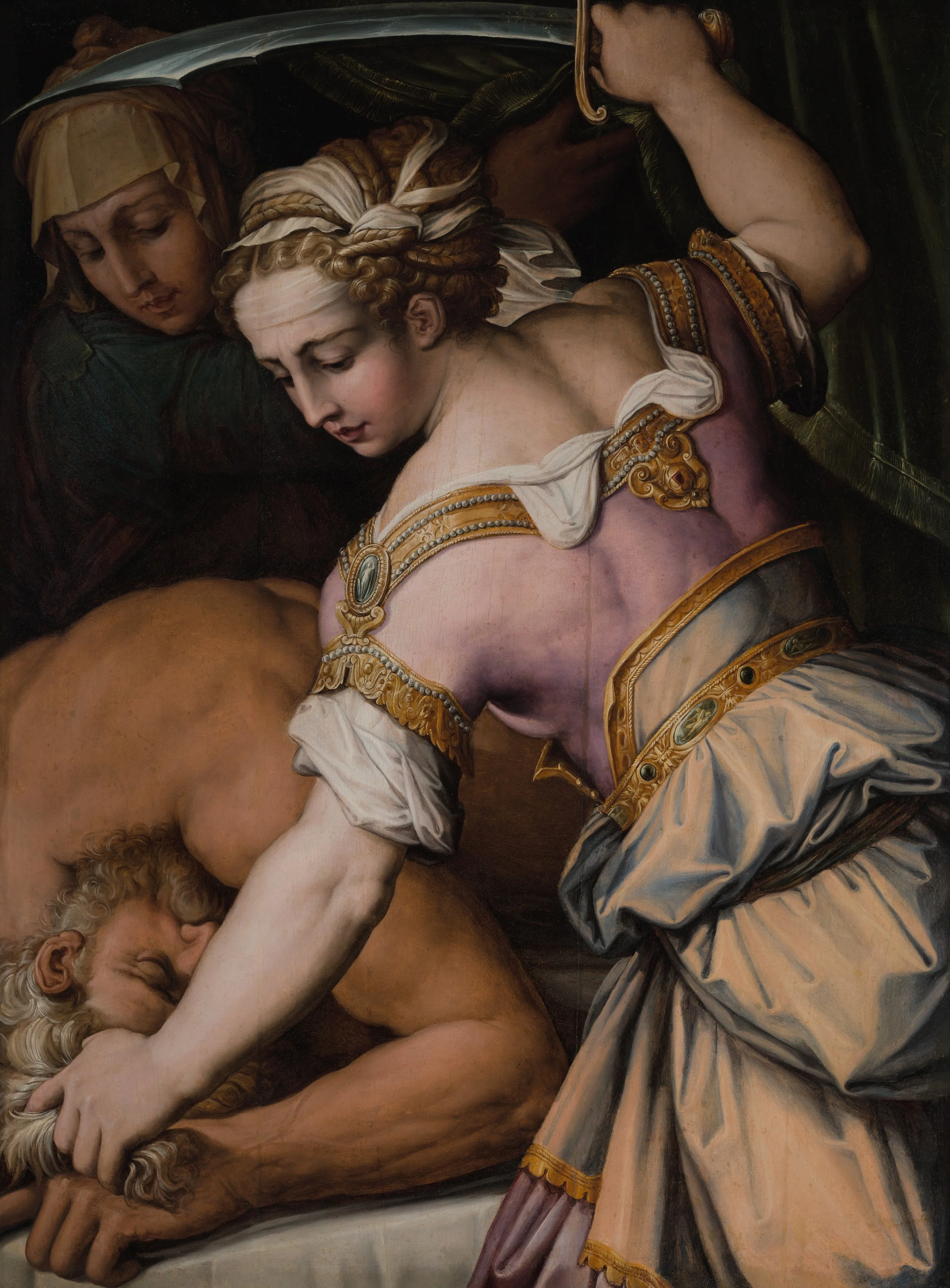
Judith and Holofernes by Giorgio Vasari
