Blondes have more fun?
So I did something exciting and kind of unexpected this weekend.
I ventured back into a place, or an identity so to speak, that I haven’t held since I was 18.
This weekend I decided to go back to brunette for the first time in many years.
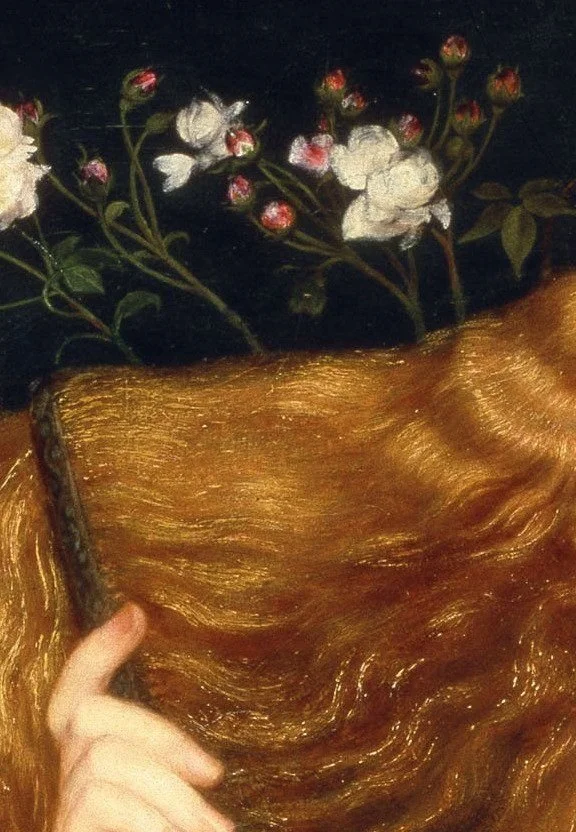
I’ll admit I didn’t do anything drastic. I’m classified as a light brown or ‘bronde’ at best now. But taking the leap and shedding my blonde highlights wasn’t so much a physical change as it was symbolic for a new phase in my life.
Anyone, men and women, but especially women, know how important our hair is, how fundamental it is to our identity. From our first hair cut as a baby, to the change in our hair after having babies of our own, and to the investable loss of it as we age, our hair mirrors the most important seasons of our lives. Having that little control over it makes us feel like we at least have a little control over ourselves and who we are.
The deep rooted symbolism of hair in can be seen throughout history and across cultures. The Victorians kept lockets of hair belonging to their loved ones (not sure if this is creepy or endearing?), many indigenous tribes cut their hair to symbolize loss, and women throughout the centuries hid their hair under veils, caps, and mantels, revealing what was underneath only in familial and intimate settings.
The point is that we do with our hair, how we wear it, and how we take care of it is important. It’s a ritual that we’ve thankfully somehow kept alive during the modern era.
I myself drive have the ritual of driving the four hours back home for the very specific task of getting my hair done by the same woman who’s done my hair since I was 16. This woman has seen me through a lot, talked with me, guided me, and simply listened, and I consider her a deep friend and mentor.
For the past 6 years of her dyeing my hair, I have always followed a similar direction and morphed into various versions of being a blonde. The blondest I ever went was sophomore year of college, but after that I stuck to natural highlights and tried to emulate the kind of golden blonde hair I had as a child.
For a good bit, being blonde felt more like me, but I’ve realized over the past few years that the initial choosing of this hair color wasn’t only a way of self-expression and young adult experimentation. It was also a way of rejecting parts of myself. Each time I first went from brunette to blonde, it was in an effort to change my identity and be perceived by others in a different way.
It went blonde both freshman years of high school and college, when I wanted to so badly ‘rebrand’ myself. I wanted to be fun, I wanted to be pretty, I wanted to not necessarily be a part of the cool crowd but be able to compete with them. I wanted for people to see me differently, to both go back to my childhood and also fast-forward to a new period.
I thought that changing my hair would accomplish this. Like the other tan blonde girls that seemed to be the beauty standard at school and online, I could be pretty and more desirable if I took control of my physical appearance. The blonde hair could only do so much the first time around in high school because I went to a tiny school with kids I’d known since I was four, but it did seem to work in college. That and I finally looked above the age of 14.
Going blonde freshman year of college coincided with a period in my life where things did improve. I had a group of close friends, felt like I was finally having fun, and felt more confident and attractive in myself.
I firmly believed that I was growing into a more authentic version of myself. But looking back, the motivating factor behind the hair, behind some of the social groups, behind the attention seeking with guys, was my desire to finally get validation from the overarching crowd.
And in some ways I did. I did get many of the things I thought I wanted, but I often had to place myself in a box or pretend to be someone I wasn’t. Changing my hair was just another way to play into this character I believed other people wanted.
I don’t regret it because it allowed me to experiment and challenge a lot of the negative self-beliefs I had about myself, but it also meant that I started to be controlled by this newer identity and all its associations.
My fear was that if I was no longer blonde, rather if I was no longer trying to be who I thought the blonde version of myself was, would I crawl back into the younger versions of myself that felt unattractive, unlikable, and ashamed?? Would I be that girl again?
The answer is no. Trying to conform to an identity out of fear and to keep playing a character that I’ve outgrown is just as restrictive as adhering to some of the younger negative perceptions I have of myself. It’s simply going from one extreme to another. From the young girl who felt ashamed and unworthy to the other girl that felt a need to prove and fit in.
So I went darker.
Not to be overtaken by a different identity or to prove something to someone.
But to let go of it all and just be closer to me.
And despite my irrational fears, I don’t feel like I’ve gone ‘backwards’. I actually feel like I’ve stepped forward into another phase of my life that’s hopefully more authentic. Where I incorporate all the parts from the past phases that felt like me and let go of the performing.
I’m not saying I’ll never go blonde again, I most definitely will, but next time I’m hoping it’s to feel more like me, not to summon a certain version of myself I think others are looking for.
With love,
Zoë
